Written by Bernardo Muciño Koenig in collaboration with Martin Posch
This week we will be delving into a very curious situation we are seeing in the Baja real estate market. First, I will preface the article by giving you a quick insight into the world of real estate development and how the "resort market" peculiarity is currently influencing real estate prices in Baja Sur. Then, my colleague Martin Posch will follow up with punctual examples to bring the case home.
The Economics of Preconstruction.
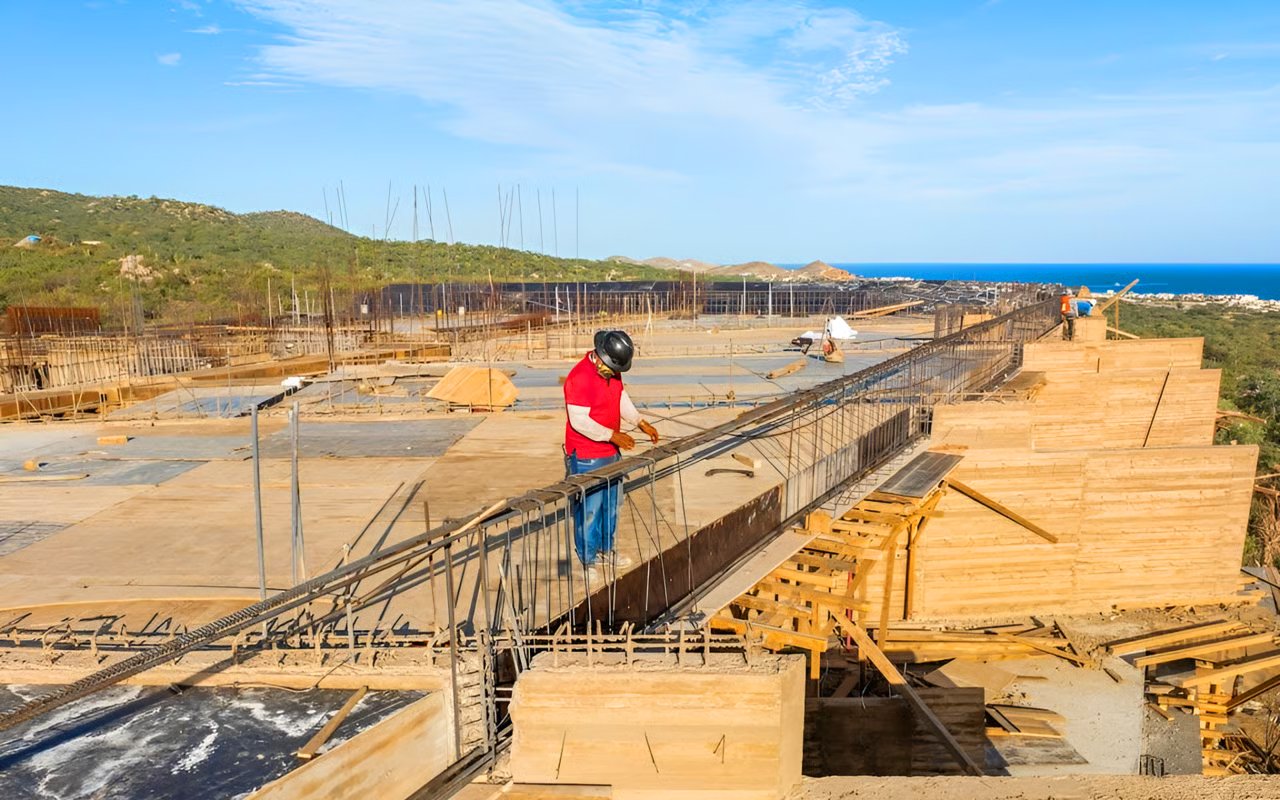
Time is money, and access to money costs money. The basic formula behind new development and preconstruction sales involves a developer raising the capital required for construction via a combination of equity and debt. This debt carries an interest rate and other costs attached to it that are usually all baked into the price. If the developer is able to access "cheaper" capital, then they are able to sell the units for less money. This is the general idea: the developer transfers their financial savings onto the buyer, the buyer absorbs some of the development risk, and in return they get a better price. This makes the deal go beyond a simple real estate transaction and into the world of investment, where risk and opportunity costs must be considered.
All Else Being Equal.
Economists like to use this term to normalize external variables that are very unlikely to happen and thus should not be considered in their present analysis. Typically, the logic stands and these unlikely elements do not happen.
Then, you have situations where all else is NOT equal. This is the Baja market today. We are experiencing an extreme swing in the development pendulum created by a set of conditions:
Inflation. Between 2020 and today, US consumer prices rose over 21% cumulatively (ConstructConnect), peaking at over 9% annual inflation in mid 2022 (Macrotrends), while Mexico’s inflation ran hot enough that Banxico pushed its reference rate to 11.25% by 2023 (México ¿Cómo Vamos? / Banxico). But construction costs did not just track inflation, they outran it. US construction material inputs remain nearly 40% above their 2020 levels (ConstructConnect), and in Mexico, residential construction was the most inflated segment of the entire industry in 2025, with labor up nearly 6% and inputs like wire and cable jumping 17.5% in a single year (Obras por Expansión).
Baja Sur absorbs both curves at once. A home here is built with Mexican labor priced in pesos and finished with imported systems and fixtures priced in dollars, so when both economies inflate, replacement cost inflates twice. A developer who locked in land, financing, and construction in 2021 or 2022 is delivering product at a cost basis that simply cannot be replicated today.
The "Superpeso." Many consider the Baja real estate market a US dollar dominated market. This understanding is only partially correct. While prices for real estate are almost always quoted in dollars, it is imperative we understand that construction costs remain firmly in pesos. This effectively means that developers are using "expensive" (relative to historics) pesos to build, only to sell their product for "cheaper" dollars. Consider the numbers. Before the pandemic, the exchange rate hovered near 19 to 20 pesos per dollar, briefly spiking above 25 during the March 2020 shock (Banxico). By April 2024, the superpeso had touched 16.26 per dollar, its strongest level since 2015 (El Informador), and after a brief correction it opened 2026 as one of the world’s best performing currencies (El Universal), trading around 17.50 as of the writing of this article. In practical terms, a dollar that bought 20 pesos of labor and materials in 2020 buys roughly 17.50 today, a loss of 12.5% in purchasing power on the construction side, before counting a single point of inflation.
Mainland Mexico’s political and economic conditions. Difficulties in the mainland are pushing an inordinate number of developers to pursue investing in the region. This has created a surplus of new development product that, in some segments, is outpacing demand, while in other segments supply remains constrained.
The Peculiarities of Resort Markets.
Lastly, we must understand a simple urban market (think LA) condition: most sellers are buyers. People in urban environments usually sell one home to buy another. This means that sellers will compare what they can buy with the proceeds of their sale. If they realize they cannot buy a similar property for the same price, then they simply will not sell, or will seek to sell for more. This is a balance that seamlessly adjusts real estate pricing and replacement values.
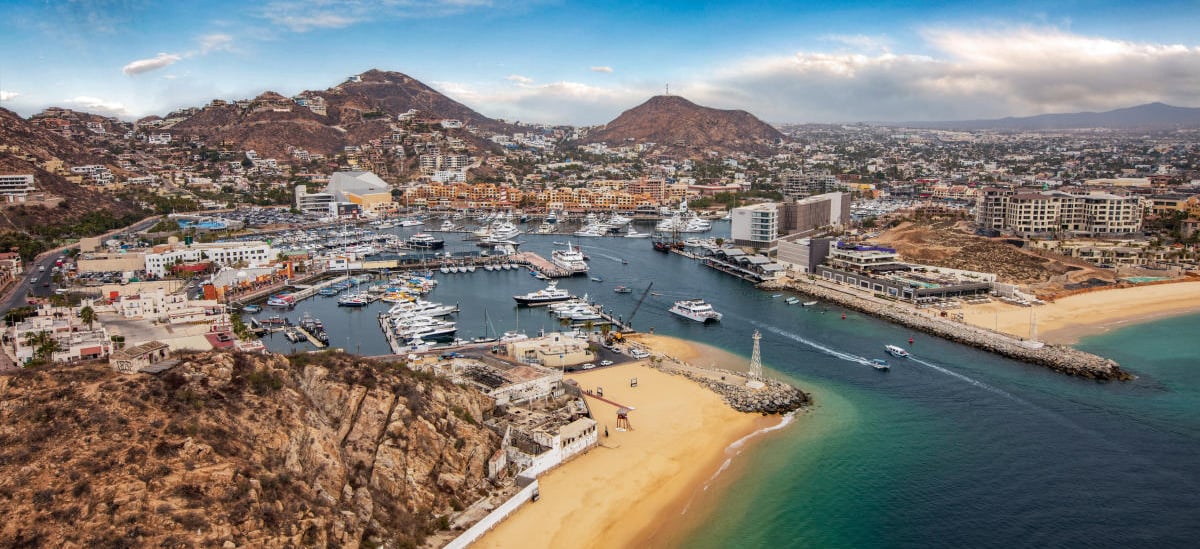
In a resort market, however, we often see sellers exiting the market with no regard for what they could buy with that same money in that same market. Instead, the focus remains solely on the neighbor’s selling price, which, again, could be wrong. This minimizes the thoroughness of sellers, and the end result is that they often sell beneath the property’s replacement value. A mistake, in my opinion.
All Else Being Equal: "A Bird’s Eye View"
My colleague Martin will exemplify below a simple yet common argument: that developers are selling their product too expensive and that resales are a better option for buyers presently (remember, this pendulum will swing). At first glance, this is what the data shows. However, I will pose the following question: could it be that resellers are selling, instead, too cheap? I would argue so.
Why? It is simple. Things cost what they cost. Developers follow a simple formula and they all reach similar conclusions. They sell their product for the minimum price they can to make it worth their time. If the financial projections do not show positive numbers, they do not do the deal.
Therefore, I would argue that the true value of a real estate asset is set by finished new development product. Supply and demand play a part in pricing, but let us not confuse value and pricing here.
So, given all the above, would you say that we are in a sellers market or a buyers market? Is now a good time to sell or to buy? What should we be buying? Martin, take it from here.

The Data: What the Market Is Telling Us.
This analysis is based on MLS data from January 1 through June 15, 2026, and includes single family luxury homes priced above $2,000,000 USD located throughout the Los Cabos market, from Rancho San Lucas in the Pacific area to El Encanto de la Laguna in the East Cape/San José del Cabo area.
The data indicates that the luxury housing market is currently favoring completed homes over preconstruction inventory. The primary factor driving this trend is the widening gap between replacement cost and resale value. Construction costs in Los Cabos have increased significantly in recent years due to higher labor, material, infrastructure, financing, and development costs. As a result, many new luxury homes require pricing that exceeds what buyers are currently willing to pay. Meanwhile, many existing homeowners built their properties years ago at substantially lower costs and can sell at prices that remain attractive to buyers while still generating a perceivable profit.

This pricing disconnect is reflected in the market data. Preconstruction homes are achieving an average sold price of approximately $1,365 USD per A/C square foot, while previously-built luxury homes are generally trading closer to $1,000 USD per A/C square foot, a premium of roughly 35% for new construction. For a 5,000 square foot luxury residence, that gap works out to more than $1.8 million USD, making completed homes a more attractive option on a dollar basis.
Time on market adds context. Completed homes sold in about eight months on average, while preconstruction properties took closer to fourteen months to find a buyer (based on closed MLS listings, single-family homes $2M and above, January 1 through June 15, 2026). Part of that gap is structural, since preconstruction listings naturally spend time on the market while the project is being built and sold in phases. But even accounting for that, there is a modest edge for finished inventory, as buyers tend to move more decisively on homes they can see, touch, and close on today.
The preconstruction segment recorded only five closed sales during the period analyzed, compared to forty-one closed sales for completed homes. Note that developer sales are not always reported to MLS, so this figure likely understates total preconstruction activity, and the preconstruction averages above should be read as directional rather than definitive.
From a buyer’s perspective, completed homes offer real advantages beyond the price gap. There is no construction risk, no waiting on permits or contractor timelines, and no uncertainty about final finishes, since everything is visible before the sale closes. Furnished options let buyers move in or start renting immediately, and mature landscaping means the property feels finished from day one rather than years away from it. Financing also tends to be more straightforward, since lenders can underwrite a completed asset more easily than a preconstruction contract. The shorter time on market for completed homes reflects how much buyers value that certainty. As a result, more buyers are choosing existing inventory over the multi-year commitment a new development requires.
For developers, the current environment presents challenges. Elevated construction costs and increased competition from resale properties are compressing margins and extending absorption periods. Only projects offering exceptional locations, branded residences, unique amenities, or superior design are consistently able to justify the premium pricing required by today’s construction costs.
Overall, the data suggests that the Los Cabos luxury market has entered a phase where buyers have more options and greater negotiating power. But there are two ways to read that gap. The obvious reading is that new construction is overpriced. The more accurate one, and the question Bernardo posed at the start of this article, is the opposite: this is not a story about developers pricing new construction too high. It is a story about resale properties trading at or below replacement cost, often before sellers fully account for what their homes are actually worth.
That gap will not hold indefinitely. As resale inventory tightens or construction costs settle, prices on these underpriced properties are likely to correct upward, and the advantage currently working in buyers’ favor will narrow. For buyers, this points to a window worth understanding before pricing catches up to true value. For sellers, it is a reminder that pricing a home well below replacement cost can mean leaving real money on the table.
If you are weighing a purchase or a sale in this market, understanding where replacement cost and resale value currently sit is the difference between a good decision and an expensive one.
This insight is part of an ongoing series, and we want it to be a conversation, not a monologue. If there is a topic you would like us to explore, a point here you see differently, or a question about the market you want answered in a future edition, reach out. Some of our best analysis starts with a reader's question.