Is Mexico Safe? What Foreign Residents Actually Say About Living Here
“Is Mexico safe?” is one of the questions I hear most often from people considering buying a home, spending more time, or eventually making a permanent move to Baja California Sur, and it is an understandable question when so much of what people outside Mexico know about the country is shaped by the stories that make international headlines.
Those of us who actually live here, however, often experience a Mexico that feels considerably more nuanced than the one portrayed from a distance. Daily life is less about the stories that make the evening news and much more about the ordinary rhythms of work, family, friends, neighbors, restaurants, markets, beaches, school runs, construction projects, morning walks and sunset gatherings that make a community feel like home.
That is why I was particularly interested in the results of Mexico News Daily's Expat Safety Perceptions Index, which asked 773 foreign residents living across 29 of Mexico's 32 states, including Baja California Sur, about their own perceptions and experiences of personal safety.
The results offer an interesting counterpoint to some of the assumptions people may have about living in Mexico.
Respondents gave their personal sense of safety in Mexico an average score of 88.97 out of 100, and perhaps even more interestingly, they reported feeling safer, on average, in the Mexican communities where they currently live than they did in the places they most recently lived in their home countries.
It is important to put those numbers in context. This survey does not establish that Mexico as a whole is "safe," nor should it be interpreted as a substitute for official crime statistics, travel advisories or the common-sense precautions that should accompany living or traveling anywhere in the world. What it does provide is something that is often missing from the broader conversation: the perspective of foreign residents who have actually chosen to make their lives here.
More than half of those surveyed had lived in Mexico for at least six years, while more than three-quarters had been here for at least three years, which makes their responses particularly interesting because they reflect established residents rather than the impressions of short-term visitors.
The Difference Between Perception and Daily Life
One of the most revealing findings in the survey had less to do with crime itself and more to do with perception. When respondents were asked how accurately they believed foreign media portrays Mexico, with 100 representing "completely accurate," the average response was just 26.55 out of 100.
That disconnect will probably feel familiar to many foreign residents who have made Mexico their home.
Mexico is a country of more than 130 million people spread across 32 states, with extraordinary geographic, economic and cultural diversity, yet events occurring in one region are often interpreted internationally as representative of the entire country. We rarely evaluate life in a small coastal community in the United States or Canada based solely on an incident that occurred hundreds or thousands of miles away, yet Mexico is frequently viewed through a much broader lens.
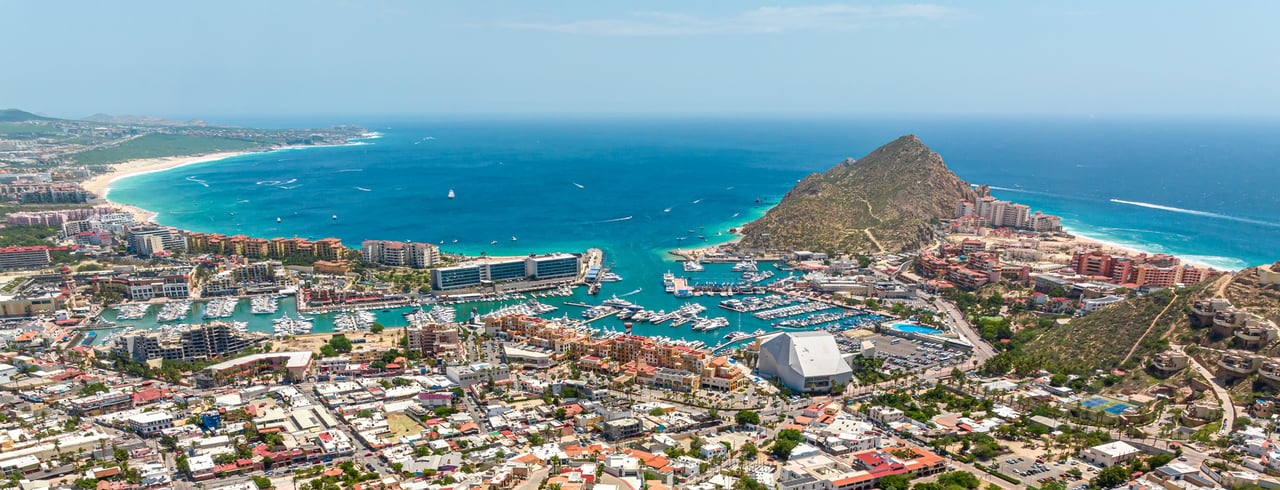
Baja California Sur itself illustrates why location matters so much. Life in Los Cabos is different from life in La Paz, just as Todos Santos, Pescadero, Cerritos and the East Cape each have their own rhythms, communities and considerations. Even within those markets, the experience of living in one neighborhood can be quite different from another.
The question, therefore, is not simply whether Mexico is safe, but what daily life is actually like in the particular community someone is considering.
What Residents Actually Experienced
The survey also asked participants about their direct experiences with crime, rather than relying exclusively on their perceptions of safety. More than four out of five respondents reported that neither they nor anyone in their immediate household had been a victim of crime in Mexico during the previous 12 months, while petty theft involving items such as phones, wallets or bags was the most commonly reported incident among those who had experienced crime.
Approximately 85% of respondents also said they had not been asked to pay a bribe to a police officer or government employee during the previous year.
None of these findings should be used to dismiss legitimate concerns about crime in Mexico, and there are unquestionably regions and situations where additional caution is warranted. They do, however, add a valuable layer to the conversation because they reflect what people are encountering in the course of their actual lives rather than what someone thousands of miles away might imagine life here to be.
What Living in Baja California Sur Actually Feels Like
My husband and I have lived full-time in Baja California Sur since 2022, and somewhere along the way Baja stopped feeling like the place we had moved to and simply became home.
Our daily life here is probably much less exotic than people who have never lived in Mexico might imagine. We meet clients, tour properties, visit construction sites, shop for groceries, have dinner with friends, walk on the beach and spend a considerable amount of time driving Highway 19 between communities on the Pacific side of the peninsula.
Over time, you also become part of the fabric of a place. You know your neighbors, recognize people at restaurants and markets, run into friends while doing errands and develop the network of relationships that makes any community feel familiar.
That sense of community is one of the aspects of Baja California Sur that many newcomers find surprising. People often arrive expecting the landscape, climate and beaches to be the things that capture them, only to discover that it is the people and the pace of everyday life that ultimately make them want to stay.
This does not mean we stop paying attention to our surroundings or abandon the same common sense we would use anywhere else. Living in another country also means learning how things work locally, understanding which areas you are traveling through and listening to people with genuine knowledge of the community.
What changes over time is perspective.
A Better Question for Anyone Considering Baja
When someone is considering buying a home or moving to Baja California Sur, I believe the most useful way to understand safety, lifestyle and quality of life is to become very specific.
If Todos Santos is on your list, spend meaningful time in Todos Santos rather than simply passing through for an afternoon. If you are considering Pescadero or Cerritos, experience those communities outside the context of a vacation. If Los Cabos, La Paz or the East Cape appeals to you, explore different neighborhoods and understand how daily life changes from one area to another.
Go grocery shopping, drive the roads you would actually use, visit restaurants and markets, talk with homeowners and long-term residents, and ask them not only what they love about living there but also what they have found challenging.
The same approach applies to real estate. Buying property in Mexico requires understanding far more than the home itself, particularly when it comes to title, ownership structures, permitting, infrastructure, water, access, development plans and, in the case of new construction, the experience and track record of the developer or builder.
Good local knowledge matters because the most important details are often specific to a community, neighborhood or individual property rather than to Mexico as a whole.
Beyond the Headlines
Perhaps the most useful takeaway from the Mexico News Daily survey is not a particular safety score, but the reminder that perception and lived experience are not always the same thing.
The Mexico portrayed in international headlines exists, but it is not the entirety of Mexico, just as the idyllic version presented through vacation photographs and social media is not the entirety of Mexico either. Somewhere between those two versions is everyday life, and for the many foreign residents who have chosen to make Baja California Sur home, that everyday experience can be remarkably different from what they expected before they arrived.
For anyone considering a move, a second home or an investment here, the best advice may be surprisingly simple: come and spend enough time to experience the place as a resident rather than simply as a visitor.
Ask questions, get to know the community, seek out reliable local information and understand the realities as well as the advantages of living here.
After years of living and working in Baja California Sur, I have found that the most meaningful conversations with prospective buyers rarely begin and end with the property itself. They are conversations about community, lifestyle, infrastructure, belonging and what someone's everyday life might actually look like once the vacation ends.
Because ultimately, choosing a home in Baja is also choosing a life here, and that decision deserves something more nuanced than either a frightening headline or a beautiful photograph.
Karina Christensen
Real Estate Advisor
The Agency Baja
Source: Mexico News Daily, Expat Safety Perceptions Index. The survey measures the experiences and perceptions of foreign residents living in Mexico and should not be interpreted as a comprehensive measure of crime or safety throughout the country.